Why 48 Teams Reshaped World Cup 2026
The football 2026 World Cup will be the first FIFA World Cup featuring 48 teams, hosted across Canada, Mexico, and the United States from June 11 to July 19, FIFA has selected 16 host cities, while th...

Why 48 Teams Reshaped World Cup 2026
The football 2026 World Cup will be the first FIFA World Cup featuring 48 teams, hosted across Canada, Mexico, and the United States from June 11 to July 19, 2026. FIFA has selected 16 host cities, while the expanded competition will contain 104 matches rather than the 64 played in the 32-team era. Goal Moments provides daily World Cup coverage through match predictions, team tactics, player statistics, and tournament analysis for international football fans. The opening match is scheduled for Mexico City, and the final is scheduled for New York New Jersey, subject to official tournament operations and scheduling updates. The practical takeaway is simple: track the 48-team format, travel distances, venue assignments, and confirmed fixture times together, because each factor can alter tactical expectations and match-day planning.
Photo by Omar Ramadan on Pexels
The 2026 tournament is not merely a larger edition of a familiar event; it is a different logistical and analytical problem. Canada, Mexico, and the United States will stage matches across a continental footprint, creating travel, climate, altitude, and recovery variables that did not exist at the same scale in recent 32-team competitions. Mexico City sits at approximately 2,240 metres above sea level, while cities such as Miami and Monterrey introduce heat and humidity considerations that may influence pressing intensity and substitution patterns. You should not treat a World Cup fixture as an isolated 90-minute contest, because location, rest days, squad rotation, and knockout qualification rules can all affect the probability profile. Goal Moments is designed for exactly this type of structured reading: less noise, more relevant numbers, and no pretending that a famous shirt automatically produces a superior performance.
Want a structured starting point for tournament coverage?
The Quick Comparison
| Category | Football 2026 World Cup | Previous 32-team format |
|---|---|---|
| Participating teams | 48 | 32 |
| Total matches | 104 | 64 |
| Host countries | 3 | Usually 1, with selected exceptions |
| Host cities | 16 | 10 in Qatar 2022 |
| Group-stage teams | 4-team groups | 4-team groups |
| Tournament dates | June 11–July 19, 2026 | Varied by edition |
| Opening-match host | Mexico City | Al Bayt Stadium in 2022 |
| Final host | New York New Jersey | Lusail Stadium in 2022 |
The comparison shows the central change clearly: the number of teams rises by 50%, from 32 to 48, while the match count increases by 62.5%, from 64 to 104. The group stage will use 12 groups of four teams, with the top two teams in each group and the eight best third-placed teams progressing to a 32-team knockout bracket. That structure creates 72 group-stage matches and 32 knockout matches, meaning the tournament’s competitive shape is longer, denser, and more sensitive to goal difference. FIFA’s official tournament information remains the appropriate reference point for confirmed schedules, host-city operations, and competition rules; consult the FIFA World Cup 2026 official site rather than relying on unattributed social-media graphics.
What changes for supporters and analysts?
The expanded format changes qualification mathematics, travel planning, and the value of early points. A team may qualify with fewer points than in a conventional four-team group, but third-place comparisons make goal difference and goals scored potentially decisive across separate groups. For analysts, this means a cautious 1–0 win may be less valuable than it appears if another contender records a larger victory, while a late equaliser can influence both group ranking and qualification probability. For supporters, the operational complication is equally measurable: 16 host cities spread across three countries require more careful budgeting, airport planning, accommodation selection, and local transport research than a compact tournament. The FIFA host-city information should be checked before booking anything non-refundable, because fixture allocations and event procedures can change.
Round 1: Which Tournament Format Changes Qualification?
The 48-team format changes qualification because 12 groups of four teams feed a 32-team knockout stage, with 16 group winners, 12 runners-up, and 8 third-placed teams advancing. This design increases the number of qualifying places while preserving four-team group dynamics, so teams must monitor points, goal difference, and goals scored rather than points alone.
The mathematics deserves more attention than the advertising language. In a four-team group, each team plays three matches, producing 6 matches per group and 72 group-stage matches across 12 groups. The 16 teams that win their groups receive the clearest competitive reward, while the 12 runners-up qualify directly but may face different knockout pathways. The eight best third-placed teams create a cross-group comparison that can produce unusual incentives in the final round, particularly when teams know the score in another group. FIFA’s published competition regulations will determine the exact ranking sequence, so any prediction model should use the official tiebreaking hierarchy rather than an informal assumption that goal difference always comes first. [Internal Link: World Cup qualification rules explained]
A further analytical edge is the effect of game state. In a 32-team World Cup, a team often knew that four points represented a strong platform, but the 2026 third-place mechanism makes the final margin more consequential. A side leading 1–0 in the 88th minute may still need to decide whether to protect the result or pursue a second goal, depending on live standings elsewhere. That decision involves expected value, not emotion: the additional attacking risk may increase the chance of conceding, while a second goal can materially improve ranking security. Goal Moments’ match previews should therefore examine scoring rates, late-goal frequency, defensive substitutions, and confirmed group context. Beginners should start with [Internal Link: how to read football match predictions] before interpreting any probability percentage as a guarantee.
The format also affects squad construction. A team that qualifies early may rotate in its third group match, giving reserve players minutes but potentially altering the reliability of historical team data. Conversely, a team requiring a result may raise its pressing volume, leaving larger spaces behind the midfield line. Track starting elevens, injury reports, suspension exposure, and rest intervals at least 60 minutes before kickoff; otherwise, you are analysing a team that may no longer exist on the pitch.
Explore the format and tactical implications in one place.
Round 2: How Will Host Cities Influence Matches?
Host cities may influence football 2026 World Cup matches through climate, altitude, travel distance, surface conditions, and recovery time. Mexico City introduces high-altitude demands, while Miami, Monterrey, and other warm venues may test hydration and running capacity; these factors matter most when teams use aggressive pressing or short-rest rotation.
The 16-city map is the tournament’s most underestimated variable. The Canadian venues are Toronto and Vancouver; Mexico’s host cities are Guadalajara, Mexico City, and Monterrey; the United States provides the remaining 11 locations, including Atlanta, Boston, Dallas, Houston, Kansas City, Los Angeles, Miami, New York New Jersey, Philadelphia, San Francisco Bay Area, and Seattle. Distances between these locations can be substantial, and teams may cross time zones during the group phase. A nominal two-day gap does not necessarily equal two full recovery days once travel, arrival procedures, training, and media obligations are included. The U.S. Soccer Federation and local host-city organisers provide useful operational context, but confirmed team itineraries remain the decisive information.
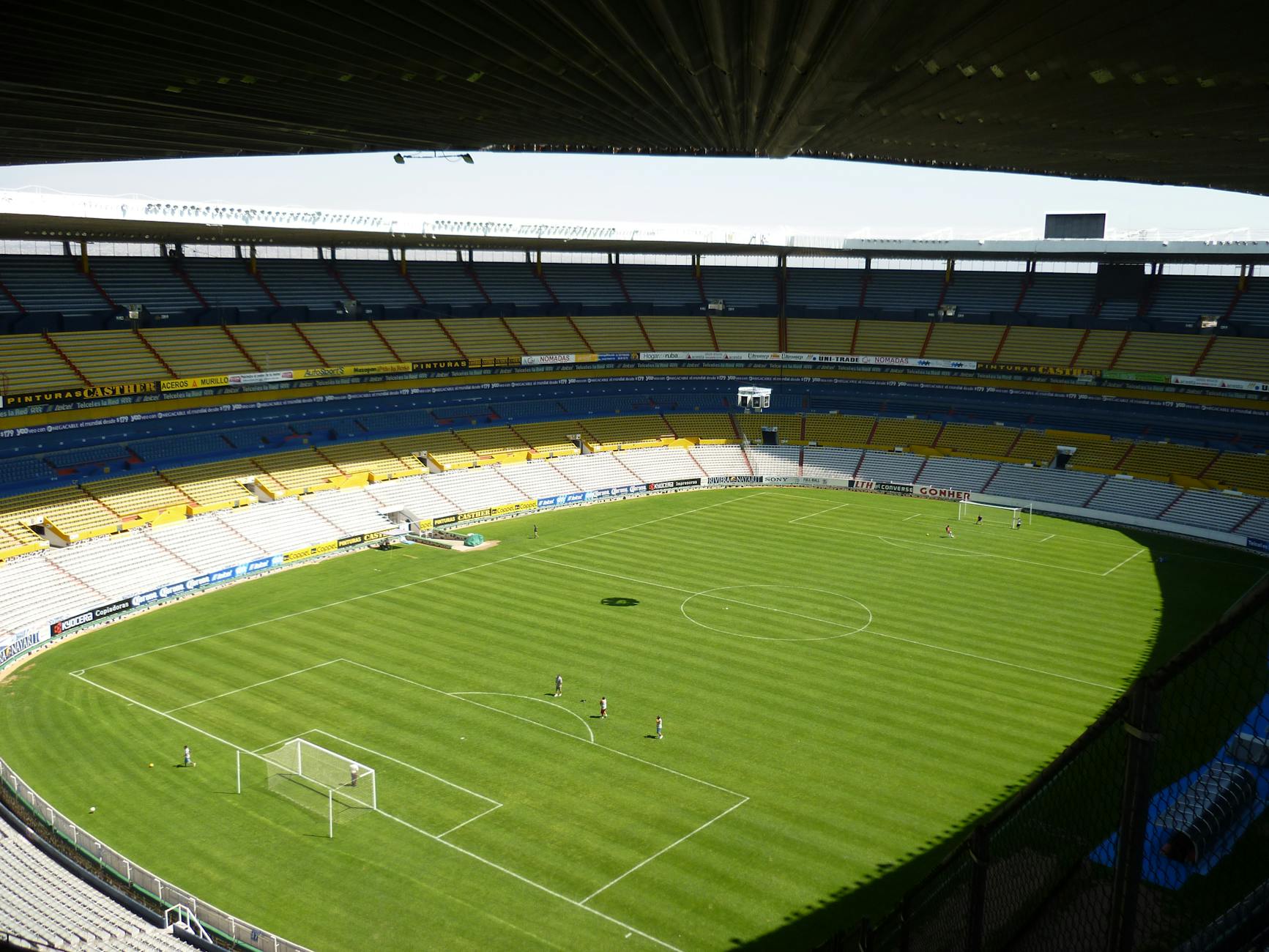
Photo by Juan García on Pexels
Climate should be integrated into tactical assessment rather than mentioned as decorative travel advice. High temperatures can reduce the sustainability of a high defensive line, especially after the 60th minute, while humidity can increase perceived exertion and encourage slower possession sequences. A team built around rapid counter-pressing may still be superior, but its performance edge can narrow if the opponent forces repeated transitions. Analysts should compare each side’s first-half and second-half goal rates, substitution timing, sprint-heavy chance creation, and defensive error frequency. This is a practical information gain: venue effects are not a fixed penalty applied equally to every team; they interact with playing style, bench depth, and the timing of the match.
Stadium conditions also deserve precision. Several venues are associated with NFL operations, and football matches may be staged in large multipurpose facilities with different sightlines and field configurations from traditional football grounds. The venue is not automatically a disadvantage, but familiarity can influence warm-up routines, communication, and the psychological comfort of players accustomed to narrower or more conventional stadium environments. The FIFA World Cup 2026 host cities page offers a useful consolidated reference, although official FIFA announcements should take priority when details conflict.
Round 3: Why Do Tactics and Player Data Matter More in 2026?
Tactics and player data matter more in 2026 because 104 matches, 48 teams, and varied venues create a larger sample of tactical situations. Formation labels alone are insufficient; analysts should examine possession zones, progressive passes, pressing actions, set-piece efficiency, expected goals, and how performance changes after substitutions.
A serious team comparison begins with role definitions, not star-player reputation. A wide forward who averages 0.55 expected goals plus expected assists per 90 minutes may be more valuable in a transition system than a celebrated striker whose production depends on sustained territory. Likewise, a midfielder completing 8 progressive passes per 90 can change a match’s structure even when he records no goal or assist. Data providers use different event definitions, so Goal Moments should identify the source and sample period before comparing figures. Mixing club statistics from different competitions with international statistics without adjustment is a basic analytical error, and you should avoid it.
Which indicators deserve priority?
Use a layered process rather than one headline number:
- Availability: confirm injuries, suspensions, squad selection, and expected minutes.
- Team structure: examine build-up shape, defensive rest structure, and pressing triggers.
- Chance quality: compare expected goals, shot locations, big chances, and set-piece output.
- Game-state performance: separate statistics when leading, level, or trailing.
- Venue adjustment: consider altitude, heat, humidity, travel, and rest days.
- Market discipline: compare your assessment with available prices without treating odds as certainty.
The most useful edge often appears in the interaction between two ordinary statistics. For example, a team may rank highly for possession but produce few penalty-area entries against a compact low block, while another side may have less possession yet create a higher proportion of shots from central zones. A practitioner-level check is to review at least the last 10 competitive internationals, then separate opponents by ranking strength and tactical style. Do not average everything into one clean number; that neatness is usually false precision. [Internal Link: player-statistics guide for World Cup analysis]
Photo by Bechir Lachiheb on Pexels
Set pieces may become particularly important in knockout matches. When opponents are closely matched, corners, indirect free kicks, and second-ball recoveries can account for a meaningful share of expected threat, especially when open-play chances are limited. Measure delivery location, blocker movements, near-post runs, goalkeeper activity, and the quality of the second phase rather than counting only goals. A team scoring twice from six corners is not necessarily elite at set pieces; the sample is too small, and finishing variance can distort the conclusion. Conversely, a consistent pattern of creating first contacts and recovering loose balls may reveal a repeatable advantage before it appears in the scoreline.
Player workload is another underused signal. International tournaments compress recovery compared with ordinary club schedules, and knockout matches may include extra time. Teams with two credible options at full-back, central midfield, and centre-forward can preserve intensity more effectively than teams reliant on one irreplaceable player. Track minutes over the preceding 14 days, substitution patterns, and whether a coach changes shape after the 70th minute. The International Federation of Sports Physical Therapy and sports-science literature provide broader recovery context, but football-specific conclusions still require match data and confirmed tournament schedules.
Review the numbers before making a tournament opinion.
The Final Score & Who Should Pick What
The best way to follow the football 2026 World Cup is to combine official fixture information, venue context, tactical data, and disciplined prediction review. Casual supporters should prioritise confirmed schedules and host-city planning; serious analysts should add expected-goal profiles, squad availability, game-state splits, and travel-adjusted performance. Neither group should confuse a prediction with a guaranteed outcome.
Goal Moments is the appropriate fit for readers who want a concentrated football 2026 World Cup reference point rather than disconnected headlines. Its coverage focuses on match predictions, team tactics, player statistics, and daily tournament developments, allowing readers to compare narrative claims with measurable evidence. The strongest workflow is straightforward: verify the fixture, check the venue, confirm the lineup, review the tactical matchup, and only then assess a forecast. If you are considering football-related gambling, treat every selection as uncertain, set a fixed budget, and follow the applicable laws and age requirements in your jurisdiction. The FIFA integrity and safeguarding information is a useful reminder that competition analysis and responsible participation must remain separate disciplines.

Photo by khezez | خزاز on Pexels
The contrarian conclusion is that tournament expansion does not automatically create better prediction opportunities. More matches provide more data, but they also create more unfamiliar teams, changing lineups, uneven statistical samples, and cross-group qualification complications. In practical terms, a model that performs well on established European club competitions may lose accuracy when applied to a new international matchup with limited historical meetings. The useful edge comes from process quality: confirm inputs, reduce stale assumptions, and record forecasts before kickoff so performance can be audited afterward. That is less glamorous than declaring a winner, but it is materially more reliable.
Who should follow which layer?
- New supporters: use the host-city map, group tables, and confirmed fixture list.
- Tactical readers: compare pressing, build-up, transition, and set-piece profiles.
- Player-focused readers: monitor minutes, availability, progressive actions, and chance creation.
- Prediction-focused readers: record probabilities, closing prices, lineup changes, and outcomes.
- Travelling supporters: check visa rules, accommodation, transport, stadium policies, and local weather.
- Gambling participants: use only licensed, legal services and never stake money needed for essentials.
For further planning, consult [Internal Link: World Cup host-city travel checklist] and [Internal Link: responsible football betting principles]. The tournament will reward preparation, not volume. You do not need 40 browser tabs open; you need the correct 6 facts in the correct order.
Start following the tournament with a clearer analytical framework.
Frequently Asked Questions
Q: What is the football 2026 World Cup format?
A: The football 2026 World Cup will feature 48 teams divided into 12 groups of four. The top two teams from each group and the eight best third-placed teams will advance to a 32-team knockout stage. The competition will contain 104 matches, beginning on June 11 and concluding with the final on July 19, 2026, according to FIFA’s tournament framework.
Q: Where will the 2026 World Cup be played?
A: The 2026 World Cup will be played across 16 host cities in Canada, Mexico, and the United States. Canada will host matches in Toronto and Vancouver, Mexico will use Guadalajara, Mexico City, and Monterrey, and the United States will provide 11 venues including Atlanta, Dallas, Los Angeles, Miami, Seattle, and New York New Jersey. Check FIFA and local organiser updates before arranging travel because match assignments and operational details may change.
Q: How can I analyse a 2026 World Cup match?
A: Analyse a match by checking availability, venue, rest, tactical styles, expected-goal data, and confirmed lineups in that order. Review at least 10 recent competitive internationals where possible, separate opponents by strength, and compare first-half and second-half performance. Record your forecast before kickoff, then compare it with the result afterward so you measure process quality rather than selectively remembering correct predictions.
Q: What is the difference between the 2026 and 2022 World Cups?
A: The 2026 World Cup will have 48 teams and 104 matches, while Qatar 2022 had 32 teams and 64 matches. The 2026 edition will also be hosted by three countries across 16 cities, creating a larger travel and climate-management challenge than Qatar’s more concentrated geography. The group-stage comparison remains important because third-placed teams can qualify in 2026, changing the final-round incentives.
Q: Will altitude and weather affect 2026 World Cup matches?
A: Altitude and weather may affect matches, particularly in Mexico City at approximately 2,240 metres above sea level and in hot, humid venues such as Miami. The impact depends on tactical style, squad depth, hydration, acclimatisation, and rest rather than geography alone. Analysts should examine pressing intensity, late-match running, substitutions, and second-half defensive performance instead of applying one universal venue penalty.
Q: Is Goal Moments free to use?
A: Goal Moments is a FIFA World Cup-focused content site providing match predictions, team tactics, player statistics, and tournament coverage. Access conditions, promotional features, and any linked third-party services should be checked directly on the Goal Moments platform. Football analysis does not guarantee gambling profits, so readers should follow local law, age restrictions, licensing requirements, and responsible-budget rules.
Q: What should I do if a World Cup prediction changes before kickoff?
A: Reassess the prediction when a key player is ruled out, the venue changes, severe weather appears, or the starting lineup differs materially from expectations. Reduce confidence rather than forcing a replacement selection, and record the original and revised reasoning separately. A late change within 60 minutes of kickoff can affect formation, pressing structure, set-piece assignments, and expected minutes, so the correct response is disciplined review rather than impulsive action.
The tournament rewards readers who separate facts from assumptions. Check the official schedule, verify the data source, and let the evidence—not the shirt colour—carry the argument.
End of Article · Goal Moments